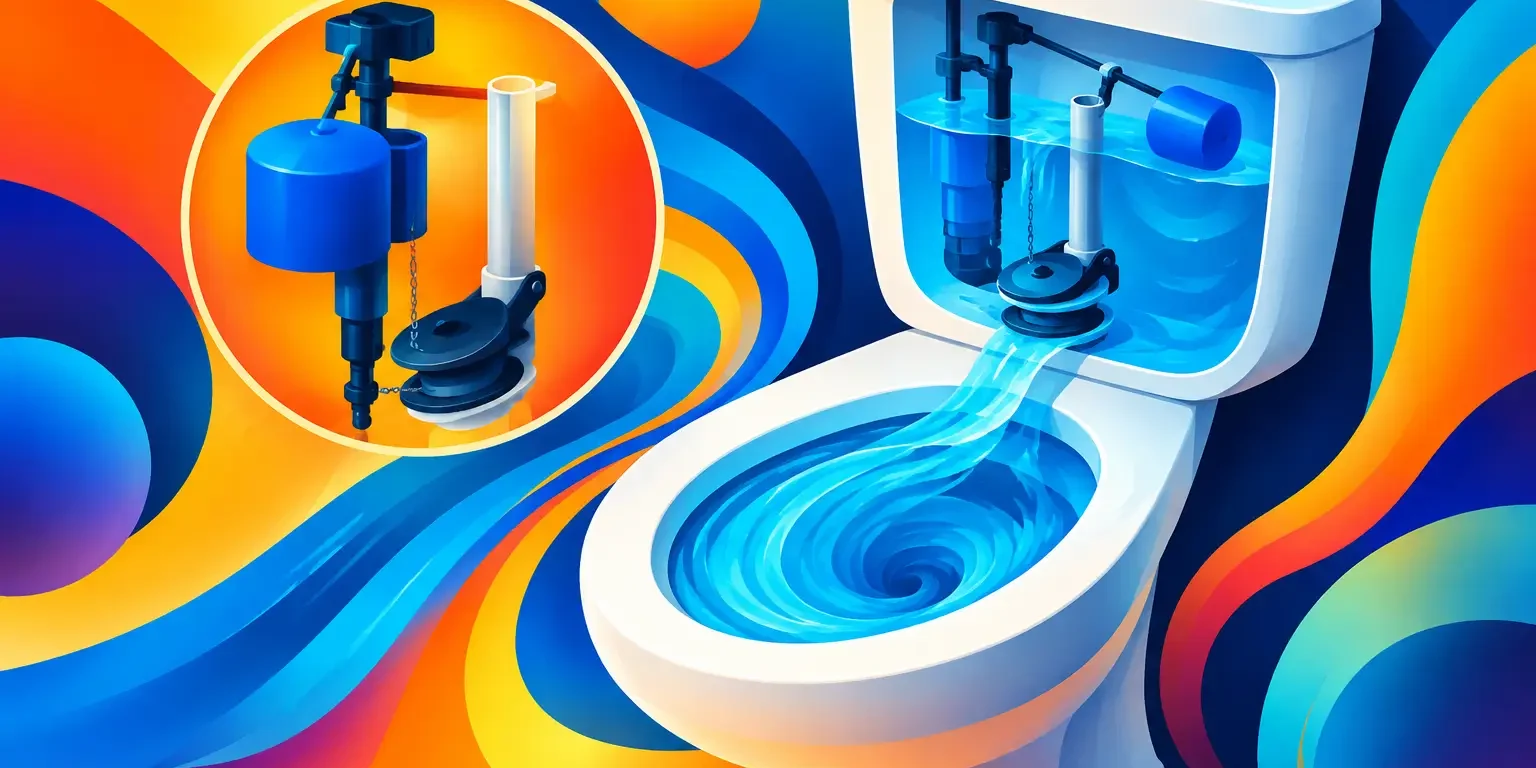
A toilet that refills every few minutes can quietly waste a surprising amount of water. If you are asking, why does my toilet keep running, the fault is usually inside the cistern – and it is often a small worn part rather than the toilet itself. The good news is that the cause can normally be identified with a few simple checks.
A running toilet may sound like a steady hiss, a brief refill cycle after flushing, or water trickling into the bowl long after the flush is finished. Left alone, it can push up your water bill, create annoying noise at night and, in some cases, lead to a cistern overflow.
Why Does My Toilet Keep Running After Flushing?
Your toilet works by releasing water from the cistern into the bowl, then refilling the cistern to a set level. Once that level is reached, the inlet valve should shut off completely. If water continues entering the bowl or the cistern does not stop filling, one of the internal components is not sealing or shutting off as it should.
Modern Australian toilets commonly use a dual-flush outlet valve and an inlet valve. Older toilets may use a flush valve with a rubber washer, often called a flapper in overseas guides, or a different style of fill mechanism. The exact parts vary, but the common faults are similar.
The outlet valve seal is worn or dirty
This is one of the most common reasons for a toilet that keeps running. The rubber seal at the base of the outlet valve is meant to hold water in the cistern after a flush. Over time, the seal can harden, warp, split or collect grit and mineral build-up.
When the seal does not sit flat, water slowly leaks from the cistern into the bowl. The water level drops, the inlet valve notices the lower level and refills the cistern. That cycle can continue all day.
You may not always see an obvious stream in the bowl. Sometimes it is only a faint ripple or a small trickle down the back of the pan. Food colouring can help confirm it: add a few drops to the cistern and wait without flushing. If colour appears in the bowl, water is leaking past the outlet valve.
The inlet valve is not shutting off
The inlet valve controls the water entering your cistern. If it is worn, obstructed or incorrectly adjusted, it may keep filling after the water has reached the correct level.
Open the cistern lid carefully and look at the water level. If water is flowing into the overflow tube, or you can hear a constant hiss inside the cistern, the inlet valve is a likely culprit. Some valves can be adjusted, but an old or unreliable valve is usually better replaced than repeatedly tweaked.
In Perth homes, sediment or debris in the water supply can occasionally affect a valve as well. Cleaning may help, depending on the valve type, but cracked plastic components and worn diaphragms need replacement.
The flush buttons or mechanism are sticking
On a dual-flush toilet, the buttons on top of the cistern connect to a mechanism that lifts the outlet valve. If a button sticks down, the rods are set too long, or the mechanism does not return properly, the valve may remain slightly open after flushing.
Remove the cistern lid and press each button gently while watching the mechanism. It should lift and then return freely. Do not force plastic fittings, as older parts can become brittle. A button issue can look like a failed outlet seal, so it is worth checking before buying replacement parts.
The water level is set too high
Every cistern has an overflow route designed to prevent water spilling onto the floor. If the inlet valve is set too high or fails to stop, water runs down this overflow into the bowl. The toilet can then seem to be constantly flushing itself.
There should be a gap between the normal water level and the top of the overflow tube. If the level is too high, the inlet valve may need adjustment or replacement. Turning the adjustment screw or clip can work on some models, but the right method depends on the cistern fittings.
Simple Checks Before You Call a Plumber
Start by taking the lid off the cistern and listening. A running toilet is generally caused by water leaking into the bowl or water overfilling into the overflow. Knowing which one is happening makes the next step clearer.
First, flush the toilet and watch the outlet valve settle back into place. Next, check whether the inlet valve stops once the cistern is full. Finally, look for water entering the overflow tube and inspect whether the flush buttons return to their normal position.
If water is continually flowing and you need to stop it promptly, turn off the small isolation tap on the wall or floor beside the toilet. Turn it clockwise gently until the water stops. Flush once to lower the water level in the cistern. Avoid forcing a seized tap, particularly in an older property, as it can break or start leaking.
A replacement seal may be a straightforward fix if you can confidently identify the cistern model, isolate the water and reassemble the components correctly. However, universal parts do not always fit properly. A seal that is only slightly mismatched can leave you with the same leak and another wasted trip to the hardware shop.
When a Running Toilet Needs Professional Repair
Calling a plumber makes sense when the problem keeps returning, the cistern parts are cracked, the isolation tap will not work, or you cannot identify the source of the leak. It is also wise to arrange a repair if water is leaking outside the cistern, running down the wall, or affecting flooring around the toilet.
A licensed plumber can test the inlet and outlet valves, replace the faulty component with compatible fittings and check that the flush volume and water level are correctly set. This is particularly useful for concealed cisterns, wall-hung toilets and older suites where access is limited or parts are no longer standard.
For landlords and property managers, a running toilet should not be treated as a minor maintenance job. It wastes water between inspections and can cause a tenant understandable frustration. Prompt repairs also help avoid the bigger issue of an ageing inlet valve failing completely.
Can You Keep Using a Toilet That Runs Constantly?
Usually, yes, but it is not a good idea to leave it for long. If the leak is only internal, the toilet will still flush, but you are paying for water that is going straight down the drain. If the cistern is overflowing externally, water is pooling on the floor, or the toilet will not stop filling even with normal use, isolate the water and organise repairs as soon as possible.
Do not place bricks, bottles or other objects in the cistern to reduce water use. They can interfere with moving parts and create another fault. Modern dual-flush toilets are designed to use a set volume, and keeping their internal components in good condition is the better approach.
A toilet should fill once, stop quietly and stay that way until the next flush. If yours is hissing, trickling or repeatedly topping itself up, a clear diagnosis now can save water and prevent a small cistern fault from becoming an ongoing household headache. For homeowners across Rockingham, Perth and Mandurah, Super Tap Man can identify the cause and get your toilet back to doing one simple job properly.